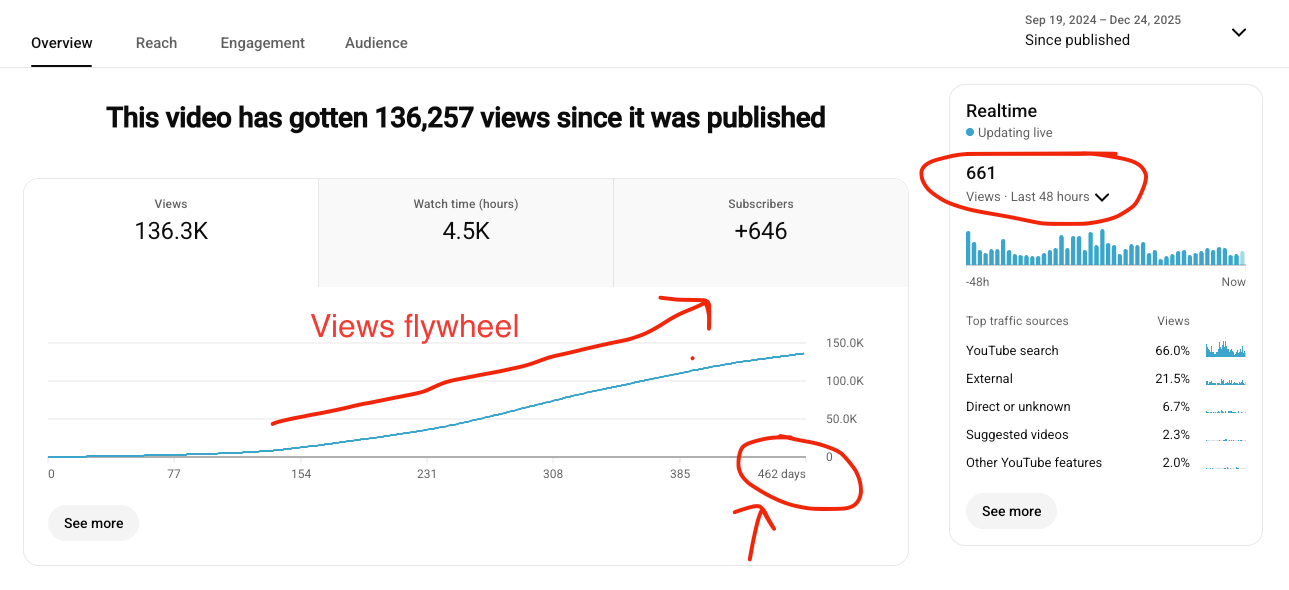
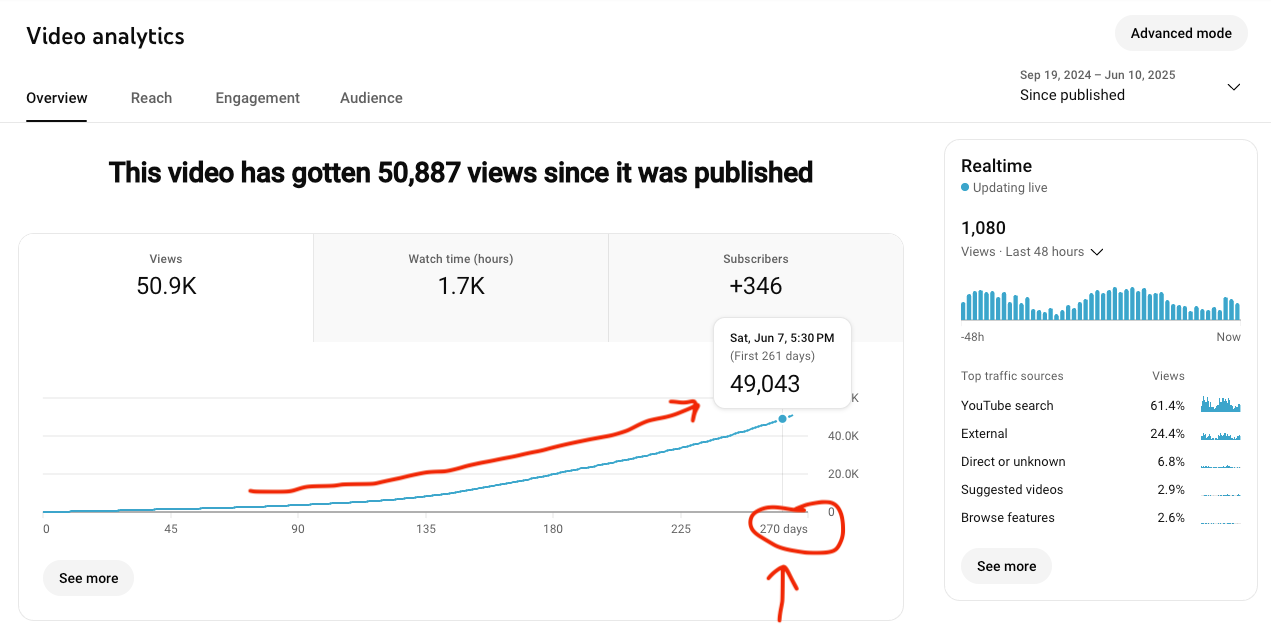
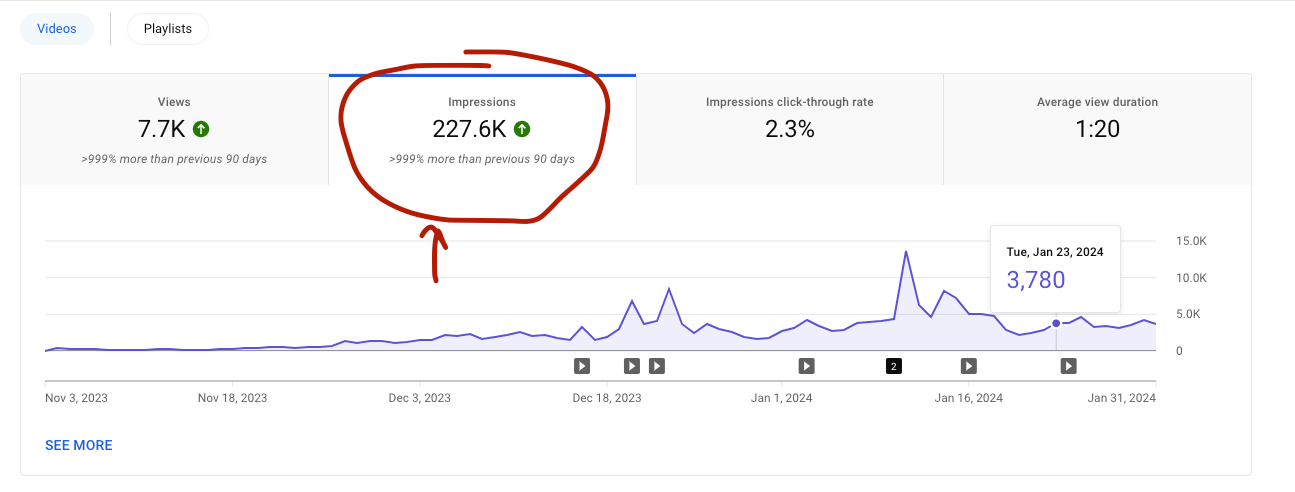
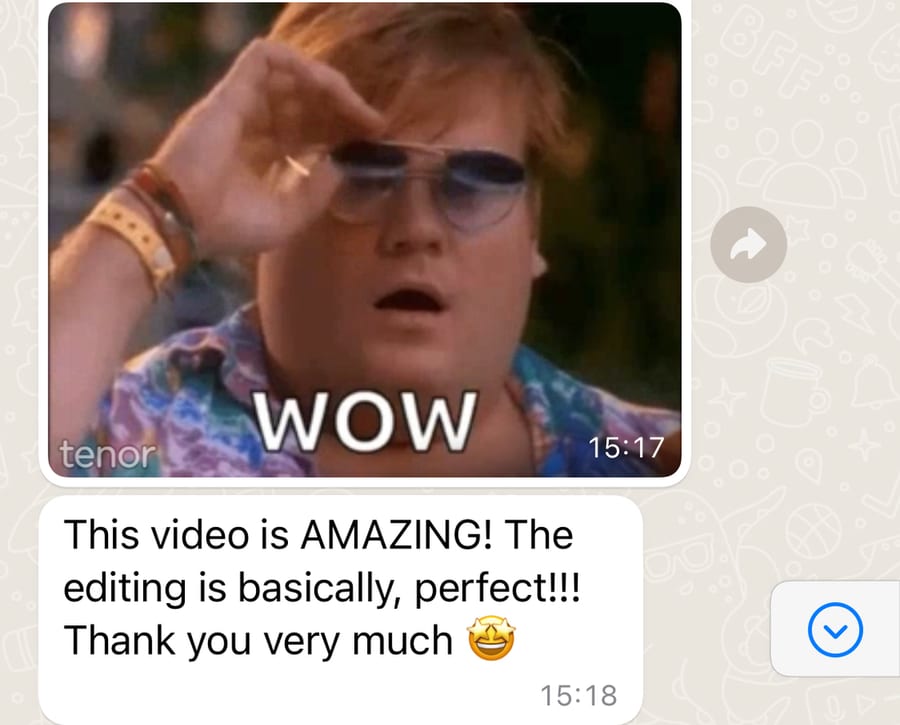
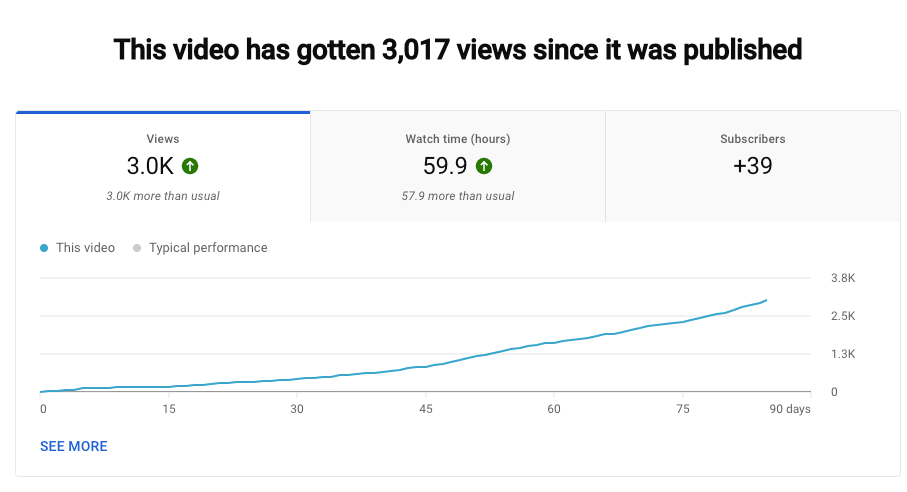
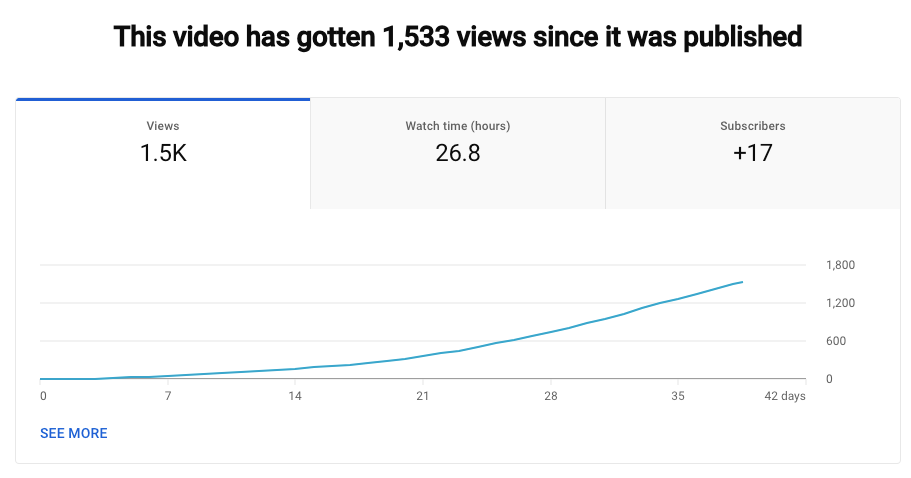
Real channels. Real businesses. No screenshots of vanity metrics.

Four different reasons founders hire us, told through the clients who stayed.

"I want authority that compounds beyond my calendar"

Headshot of Gal
Gal
Marketing Lead, Flowout, a productized Webflow agency

Flowout did not come to us for leads. Their SEO partner recommended YouTube to build brand awareness and authority, and Gal, their marketing lead, was explicit about it from day one: "We weren't targeting direct sales or leads. We wanted to establish this as a brand."

Two-plus years later, the machine still runs every month. Scripts, editing, thumbnails, publishing, all handled, because as Gal told us, "if having to write our own scripts fell on us, that would be a real bottleneck." His evaluation criteria for keeping a partner this long: "Reliability, speed, responsiveness. That's hugely valuable today."

What this engagement proves: YouTube as a long-term brand and SEO asset for an agency whose other channels already work. The compounding layer, not the rescue plan.

"I want prospects pre-sold and a pipeline I can be picky with"

Headshot of Isaac Perdomo
Isaac Perdomo
Founder, Opzer, accounting firm automation

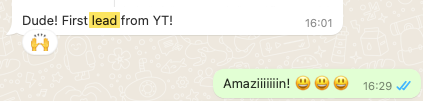
Before working with us, Isaac had tried YouTube the way most founders do: four videos, one dead lead, and a channel that quietly stalled. The goal was never volume. He wanted to build a firm where he picks and chooses who he works with, focusing on high-tier clients only.

That is exactly what the library does for him now. In his words: "The calls from YouTube are the easiest calls to close." Prospects arrive having watched him think through their problems for hours. The result of compounding that trust: his agency now runs a waitlist.

And the three-hours-a-week promise held up. After refining the system together, Isaac films two videos in about an hour.

What this engagement proves: YouTube as the filter and the pre-sell. Fewer calls, easier closes, and the leverage to say no.

"I want my outbound to actually convert"

Headshot of Vlad Gvozdic
Vlad Gvozdic
Founder, LeadHunter (leadhunter.net), cold email agency

Vlad runs cold email for B2B companies, so he sees the pattern from both sides: the first thing a prospect does with an interesting cold email is Google the sender. Clients with a real presence, an active channel, a professional footprint, get dramatically better positive reply rates than clients who are invisible. He knew he needed the same asset behind his own outreach.

What stopped him was not belief, it was camera confidence, equipment confusion, and an internet full of conflicting advice. So we solved exactly that. Camera comfort went from zero to natural in about a day of focused work. The setup is an iPhone and proper lighting, no studio. By his own estimate, a full video now takes one to three hours end to end, well inside the three-hours-a-week promise.

His framing of the channel is the one we wish every founder had: "It's not entertainment. I don't care about views. I just care about: does this fit my target audience?" And on timelines, he is honest in the way we like: it snowballs. Each video plays off every video before it.

What this engagement proves: YouTube as the credibility layer that makes outbound and ads convert better, built by someone who measures outreach for a living.

Headshot of Michal Bohanes
Michal Bohanes
Founder, Alpha Lead Academy, cold outbound coaching for B2B
I already made $500K with cold outreach, but YouTube is what makes my entire system work better. It's the difference between being just another cold email and being the trusted authority.

Michal already has a powerful outbound engine running 24/7. Over 2,000 emails a day go out to new prospects, feeding a $500k a year coaching business that keeps growing. On paper, he does not need YouTube. But YouTube is what makes his entire system work better.

It is where prospects go after they get his cold email and think, "Who is this guy?" They search his name, find his videos, and he is immediately differentiated from the noise. In between calls, Michal sends prospects YouTube videos that answer their specific objections, making his sales cycle much shorter. By the time they meet again, there is no convincing left to do.

And even if they do not close right away, YouTube has tagged them in the algorithm, so his videos keep showing up while he is not actively following up, keeping him top of mind for when the time is right. If you are an agency owner or a coach making $10k to $30k in revenue and you want to add another revenue stream, or just want to make your current sales process more efficient, adding YouTube to the mix is the easiest move in 2025. It is how Michal has already scaled to $500k a year, and now he has his eyes on $1M.

  • Substantially increased conversion rates on sales calls
  • Now scaling toward $1M a year with YouTube as the secret weapon
  • YouTube differentiates him from cold email noise
  • Videos answer objections, shortening sales cycles dramatically
  • The algorithm keeps him top of mind even without follow-ups

What this engagement proves: YouTube as the multiplier on an outbound engine that already works. The trust layer that turns cold email into easy calls.

"I tried it solo. I needed the system, not more motivation"

Headshot of Tony Wilson
Tony Wilson
Founder, Accquip, fractional CFO for digital agencies
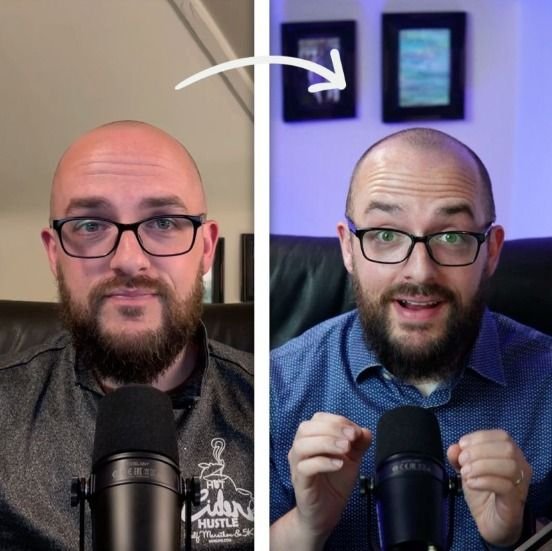
Tony's recording setup before and after: from a plain webcam shot at home to a lit, professional on-camera setup
Tony's recording setup, before and after.

Tony had invested years into LinkedIn and saw the ceiling clearly: "It felt like I was constantly treading water." Posts got impressions for a day or two, then died. He wanted the opposite, a library with staying power: "All this time and energy is an investment into something that's going to be there for the long term."

He had also already tried video. His own diagnosis: the videos felt clunky compared to what he watched on YouTube, and he could not pinpoint why. Scripts took too long and had no clear structure. High touch services like his only need one new client a quarter, so the goal was never views, it was reaching the right people with content built around one question: what is the transformation this video brings about?

The coaching fixed the three things he names himself: clarity on the messaging and the why behind every video, the craft of bingeable content with a through line instead of standalone videos, and frameworks that leveled up his existing editor and designer, not just him. His verdict on the weekly cadence: "Anytime you're talking about content, unless it is a priority, it just is not going to get done." And on the decision itself: "It's a no-brainer. I would just say go for it."

What this engagement proves: the coaching path. We run strategy and plug your existing team into the system, and the founder stays the brain of the content.

Headshot of Giovanni Segar
Giovanni Segar
Founder, Nuance, an app-building agency

Giovanni had already tried YouTube. He knew the videos were not the problem: "Editing is just super time-consuming." And he had a worry most prospects never say out loud: "I was worried about the rigidity of the process and whether it would fit what works for me."

So we built the strategy around his topic instincts and his voice, and took everything after the recording off his plate. His description of the working relationship: "I could just come up with an idea, record the video, send it your way, and it gets posted with minimal back and forth."

What this engagement proves: the system is flexible by design, and the founder keeps creative control. We handle execution, you stay the expert.

The best time to start compounding was a year ago. You know the rest.

One call. We will look at where YouTube fits in your acquisition, what your channel could look like, and tell you honestly if it is not the right move yet.

Apply to work with us here

The questions everyone asks. Answered straight.

You can, and for editing alone you should. But editing is not why channels fail. Channels fail on strategy and packaging: wrong topics, wrong titles, wrong positioning. Freelancers execute, they do not decide what gets watched. We have seen technically beautiful channels with hundreds of videos and zero clients. The expensive part of YouTube is not the editing, it is the year you lose finding that out.